AN AUTONOMOUS AI EMPLOYEE
You give it a mandate. It runs the function.
Not a chatbot and not a copilot. Fahim works inside the tools your business already uses, on its own schedule, across days — and it finishes the work rather than drafting it for someone else to finish.
Fahim — the perceptive one. It reads the room, keeps the record, and knows which decisions were never its to make.
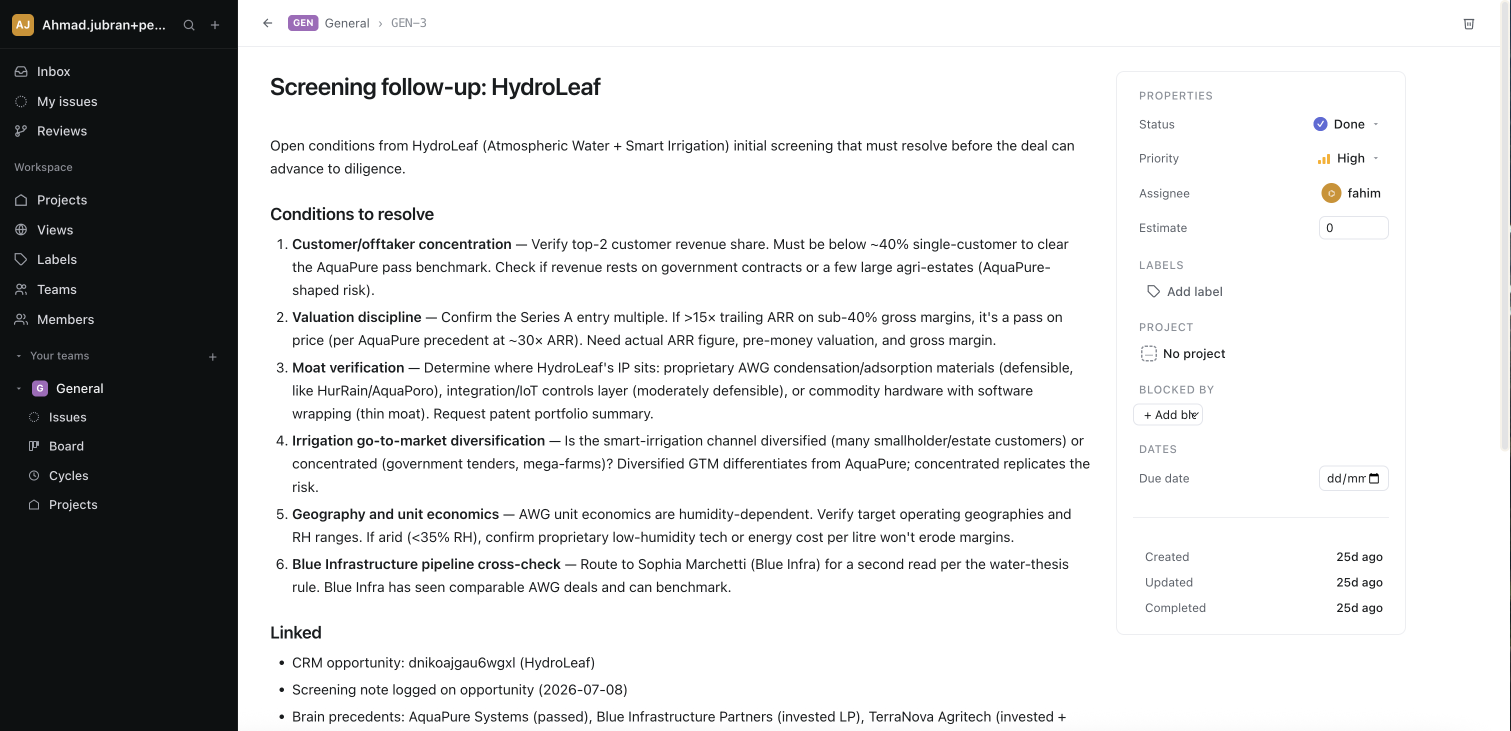
It ran our own companies before it was offered to anyone.
Operating companies inside our group run Fahim on live commercial work today — businesses with their own clients, their own revenue and every reason to switch it off if it didn't hold. Not a pilot, and not a demo built for this page.
Most AI drafts. This one finishes.
A mandate is not a prompt. You hand over a function — the intake, the pipeline, the follow-up nobody has time for — and it runs until the work is closed, over days, without being asked again.
HOW THE WORK ARRIVES
It's already there when the work shows up.
You don't open Fahim. Work reaches it — through a form on your site, an account you connected, a system it already watches — and the same employee picks it up each time, with the same memory of your business and the same limits you set.
One employee, always on
However the work arrives, the same thing picks it up — with the same memory, the same permissions and the same record. It doesn't wait to be opened.
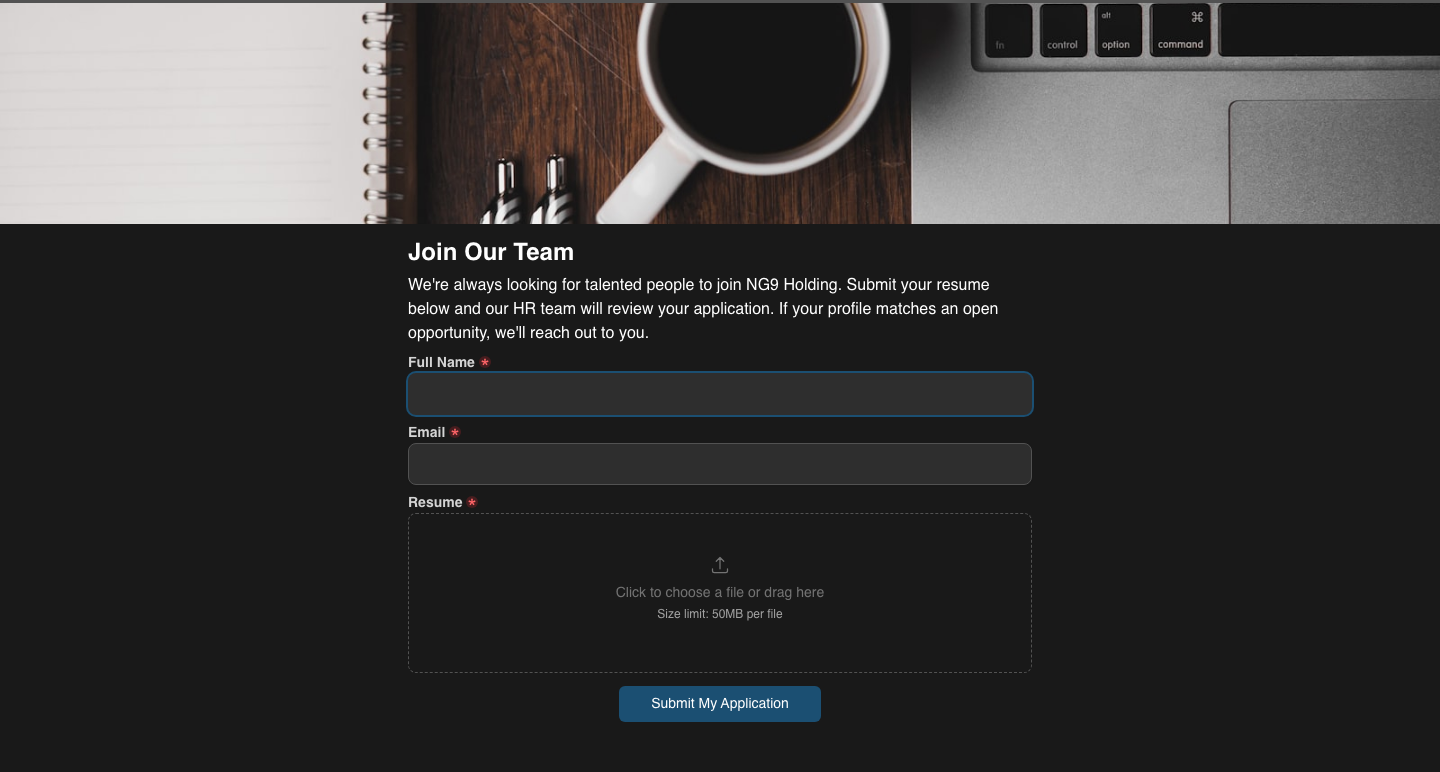
ONE MANDATE, AS RECORDED · 27 JUL 2026
One sentence in. A closed loop out.
“I need a way to collect applications, with résumés attached, a summary of each one, and somewhere to track them.” That was the whole brief. Everything below is what happened next, in the order it happened — including the two moments it stopped and asked.
THE CONTROL PLANE
It doesn't refuse. It asks.
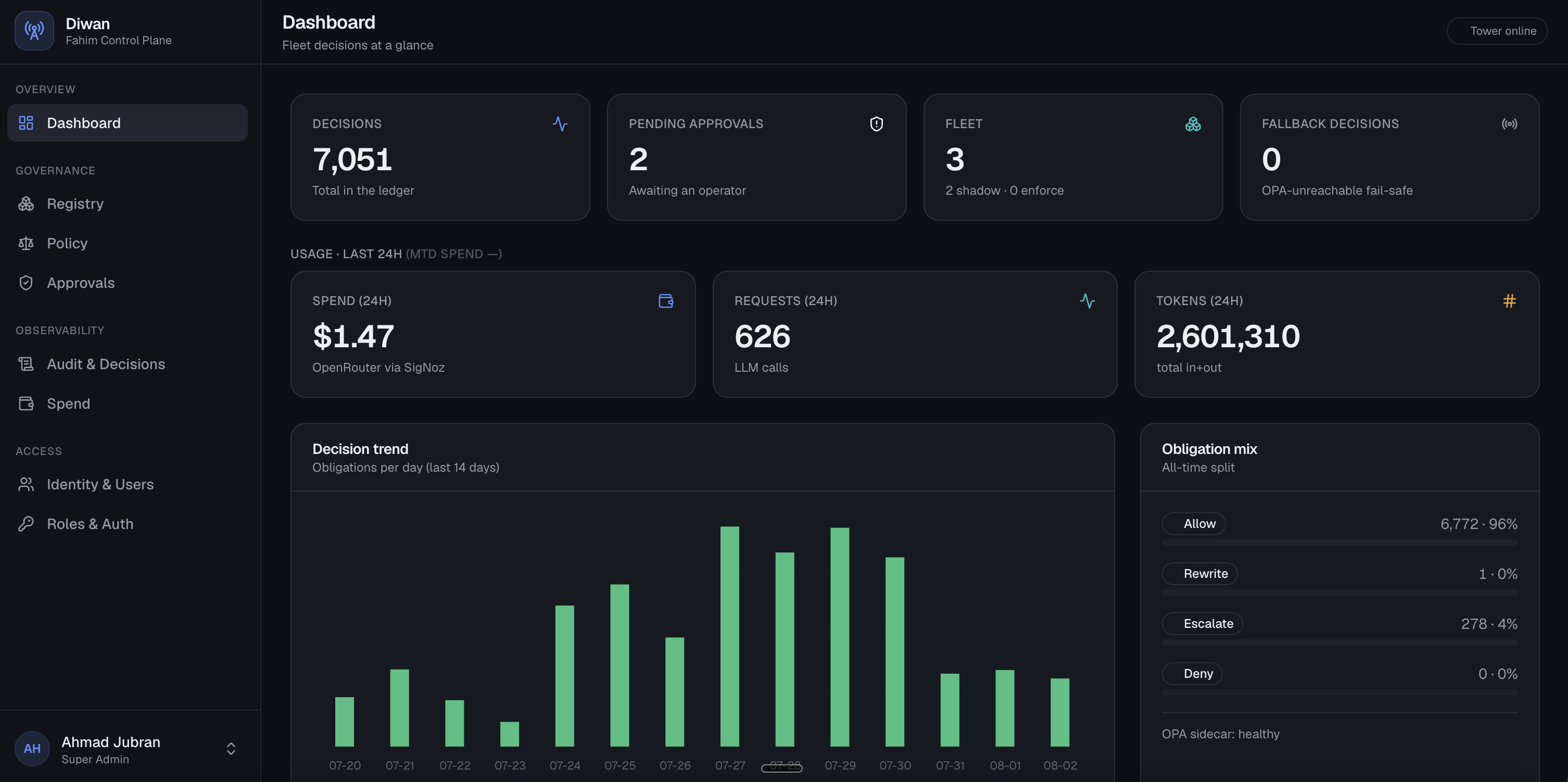
Seven thousand and fifty-one decisions on the ledger. Two hundred and seventy-eight of them — four percent — it stopped and put in front of a human rather than deciding alone. That ratio is the product.
THE BRAKE
Autonomy is only worth having if it stops.
You decide which moves are consequential. Those ones pause on your channel and wait, for as long as it takes. It will get things wrong sometimes; this is what keeps a wrong thing from becoming a done thing.
Send the signed contract to Al Noor?
mail.send is provisioned for scheduling and follow-up. Contract dispatch is not in Fahim's grant, so it stops here.
THE CONCRETE OBJECTIONS
The questions worth asking.
Including the one most vendors won't answer in writing.
What does it actually connect to?
The systems you already run — CRM, tasks, email, calendar, Microsoft 365, your documents. It works inside them rather than asking you to move. Connections are made per person, and each one is private to whoever made it.
Does it act without asking?
Inside the scope you granted, yes — that is the point of it. You decide where the gates sit, and anything you put behind one stops and waits for you. It waits as long as it takes; it does not decide for you because you were slow.
Does it get things wrong?
Yes. It is an employee, not an oracle. What we can offer is that every action it takes is attributable and on a record you can read, that consequential moves wait for a human, and that you can revoke it in one decision.
Where does our data live?
Self-hosted end to end, deployed in your region, inside your tenancy. Where a frontier model is used it is restricted to zero-retention, no-training providers. A fully air-gapped deployment on your own premises is available because we control the whole stack.
Is this a pilot?
No. It runs live commercial work inside operating companies of our group — businesses with their own clients and their own revenue. They trusted it with real operations before anyone outside was asked to buy it.
You're not buying software. You're adding a worker.
Fahim is labor, not a license. It takes a function — the intake, the pipeline, the follow-up nobody has time for — and runs it until the work is closed. Bring the one that eats your week and we'll close it in front of you.